
Smart Devices - Afraid to Stop Crime?
Why Alexa Isn't A Great Eyewitness To Crimes In The Home
Posted by Charlie Recksieck
on 2026-04-23
So, the devices are always kind of listening. But sometimes they hear things no one expected, like a crime. [cue dramatic music]
They've been identified as hearing crimes in multiple instances, such as this 2018 New Hampshire murder case and a 2019 Texas murder.
As this Kelmansky Law article discusses, "Smart home devices have quietly transformed from convenient household gadgets into potential star witnesses in criminal proceedings."
However, it's not as simple to play back whatever your smart home device has recorded, as if it were part of a court transcript or even a recorded Zoom meeting. Google Home or Alexa are not always listening to everything; they're much more selective, by design.
How Smart Home Response and Recording Works
The technology operates with "wake words". They are designed to be dormant yet passively listening in case somebody says the magic words. For Alexa, it would be "Alexa ..." or for Google devices, it would be "Hey, Google" or "OK, Google."
They limit it to a few specific words, so it's not accidentally triggered. Which is exactly why I always name my trivia night teams at a bar, "Hey, Siri, call Mom."
The device usually only has a few seconds of buffer time recording at any point - for example, Alexa has a 3-second buffer time. If a wake word IS said, it can go back 2-3 seconds from there for its recording.
Here's the process:
* When you say the wake word ("Alexa"), the device starts capturing audio.
* It continues recording your command as you speak it, plus a brief buffer after you stop talking so it doesn't cut you off mid-sentence.
* That post-speech buffer is typically a few seconds or less, not a long continuous recording.
* Once Alexa detects you've finished your request (silence or completion), it stops recording and sends the short clip to Amazon's cloud for processing.
If a wake word was never said, then there will not only be no response from the smart speaker but also no recording from the cloud. Or that's the way it's supposed to work; if you have the false trigger, like saying "Hey Sari - " around your iPhone, that could trigger.
If a person yelled at his wife, "I'm gonna kill you!" it wouldn't be recorded by Samsung unless it was preceded by "Hey, Bixby, remind me to buy coffee" a few seconds before the threat.
At least, that's what the tech companies have always claimed, that they only record after wake words. Smart home devices have a lot of skeptics, mainly for privacy. So, tech giants spend a lot of energy to allay our fears of Big Brother always listening.
On the occasions when smart home recordings have been sought in the prosecution of a crime, the following things have to take place.
1. A wake word has to wake up the device - either intentionally or accidentally (where a character on TV says, "Alexa isn't here.")
2. The crime or audio evidence happens in that recording period. Alexa allegedly stops recording after 3 seconds of silence between Alexa and the user.
3. The authorities have to be aware that Alexa might have this data.
Even in court cases where smart home devices have been subpoenaed, they stress the wake words and limited recording system. Not to be conspiratorial or wear a tin-foil hat while I say this, these are all closed and proprietary systems, so we don't really know.
What we can safely assume is that tech companies are very sensitive about being perceived as listening, even if it's selective.
There's also a legal gray area here: who owns those recordings? I'm sure there's something in the user agreement about them owning those recordings. But when CAN or MUST companies share data with authorities?
Cars, Phones, and Door Cameras
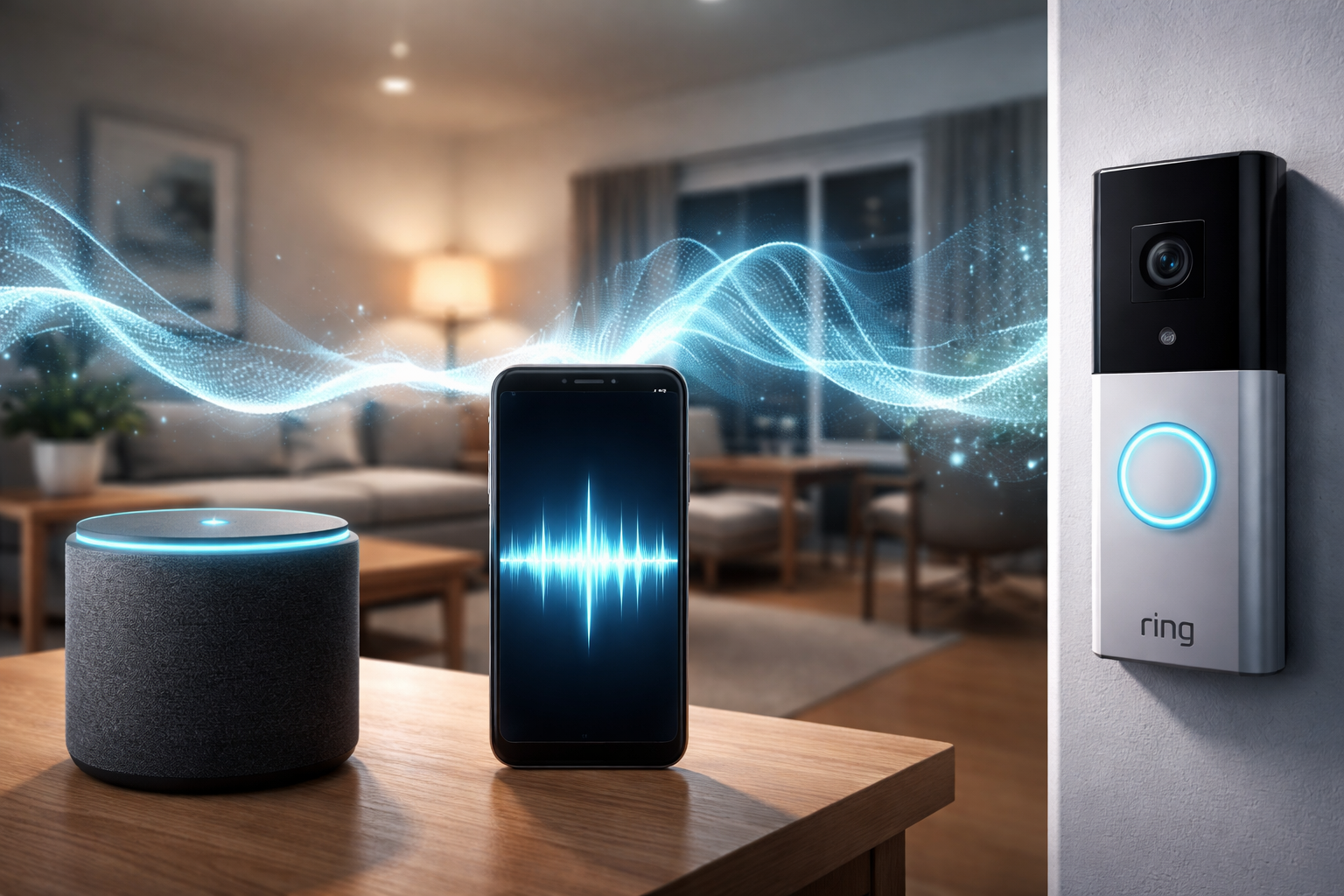
There are other forms of smart tech that operate similarly: Phones, doorbell cameras, and cars. They all are supposed to respond to wake words - although the Ring camera reacts to motion instead of sound. They collect similar ambient data.
These other technologies have also had their data utilized in criminal cases, almost routinely in some cases. Ring camera recordings detect package thefts for sure, but also can catch persons of interest's presence or not. Cellphone location data is frequently used to trail suspects.
Smart home devices, by their wake-only recording nature, are used less in courtrooms.
Ethics and Morals
Here’s the big ethical question: Is ignoring detected harm more troubling than listening too closely?
I'll take this one step further by asking: are technology companies afraid of voluntarily stepping up with evidence in a murder case because it would wake the public up to the fact that they ARE listening?
Look at the graphic of the conditions for smart homes being subpoenaed in criminal cases:
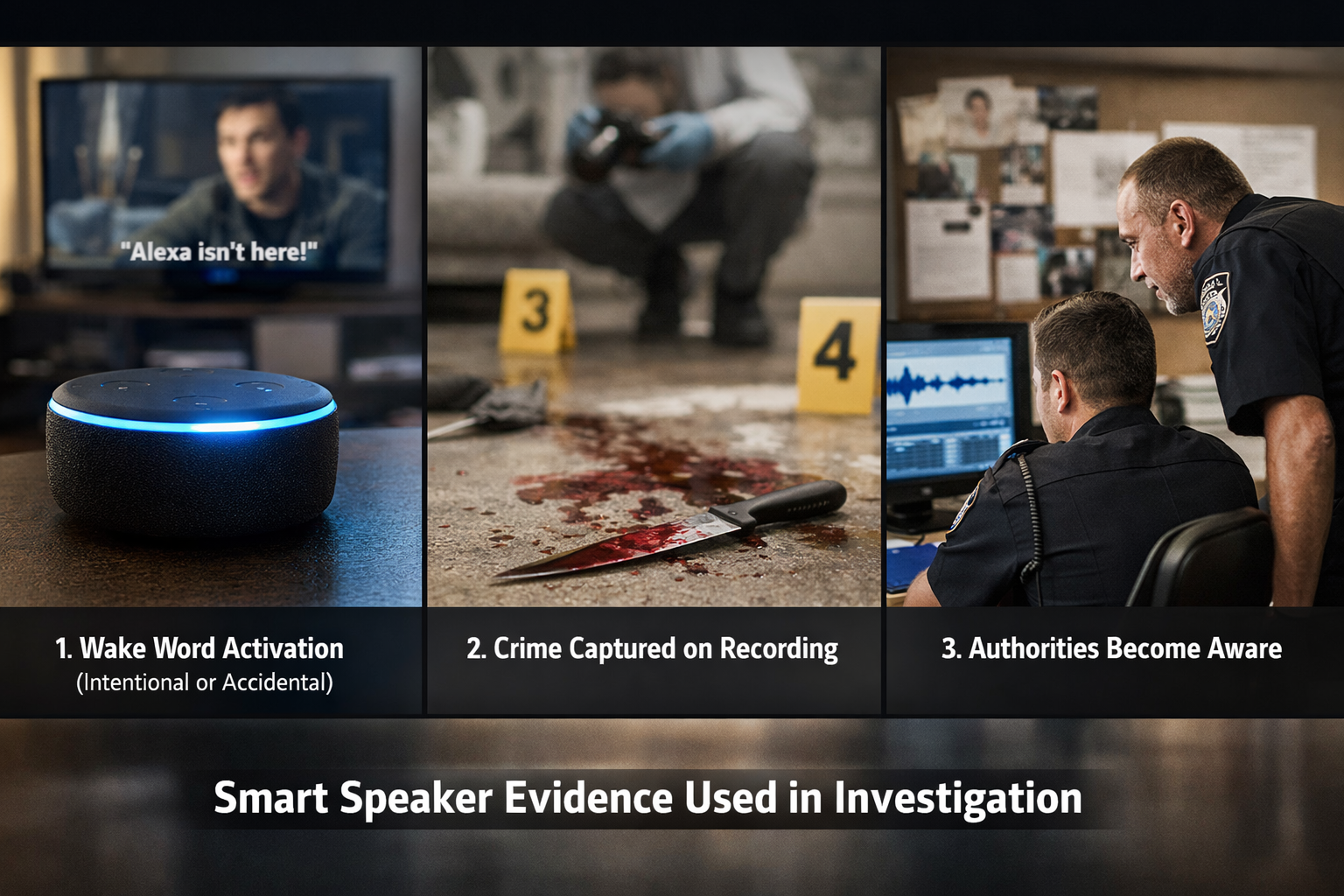
The key there is #3. The police or lawyers have to be aware of the recording. Note that nowhere does this say that Amazon calls the police. That doesn't happen.
The Future
AI detection of distress signals could become technically possible and more reliable. Of course, it will be controversial. And it could almost head towards sci-fi scenarios like the "pre-crime" of Minority Report.
Smart homes are going to start facing a choice of when they have to blow their cover and speak up when they hear something.
