
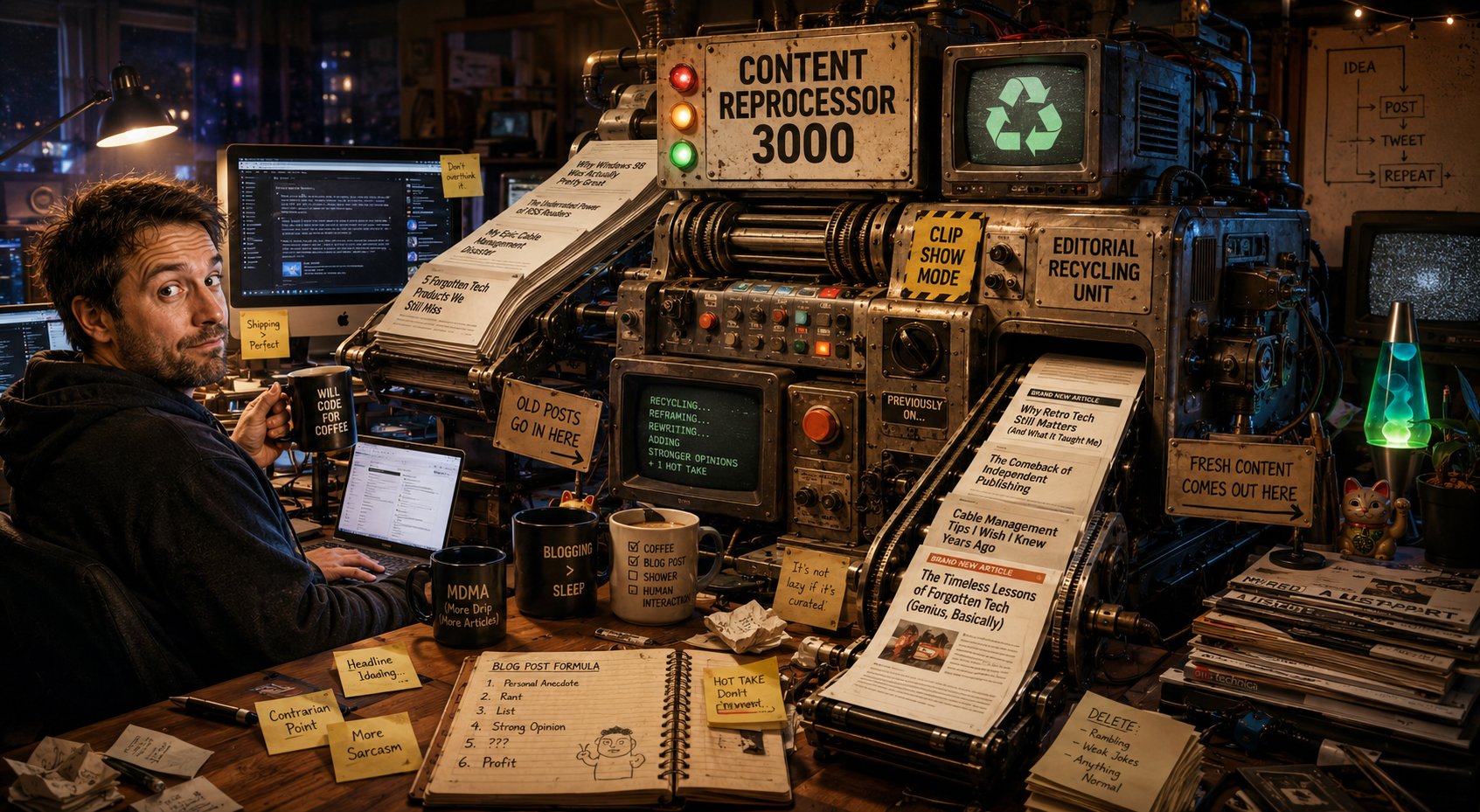
Clip Show
I Get Out of Writing a New Blog Post By Picking Previous Greatest Hits
Posted by Charlie Recksieck
on 2026-05-28
Writing takes time. Even the best writers can’t spit out finished product copy ready for public consumption. So, even the weekly blog posts here are time-consuming. I’m not complaining and it’s certainly my choice to do this. What’s the total opposite of "having a gun to my head?" But I was wondering what’s the best way to post this week without actually writing? And then it occurred to me.
Clip show!
You know what a "clip show" is, right? It’s a TV show with a suspicious amount of recycled footage. When old school sitcoms were exhausted making 26 episodes per season. So, they’d write a paper thin episode where one beloved character says to another, "Remember when ..." and then the picture fades into flashback mode. The producers, writers, actors, and crew all get credit and pay for the episode and everybody goes home early that week.
Here, I’m doing the blog version of this. I’ll just pick out some of the posts I’m happy that I wrote and perhaps nudge some of you to take a second (or first) look.
I’m going to limit this to one per year. I need to save enough to do a Clip Show #2 in a future season.
Remember when .... [spacey music plays, fade to clip]
What’s An API (Part 1) - Click here to read
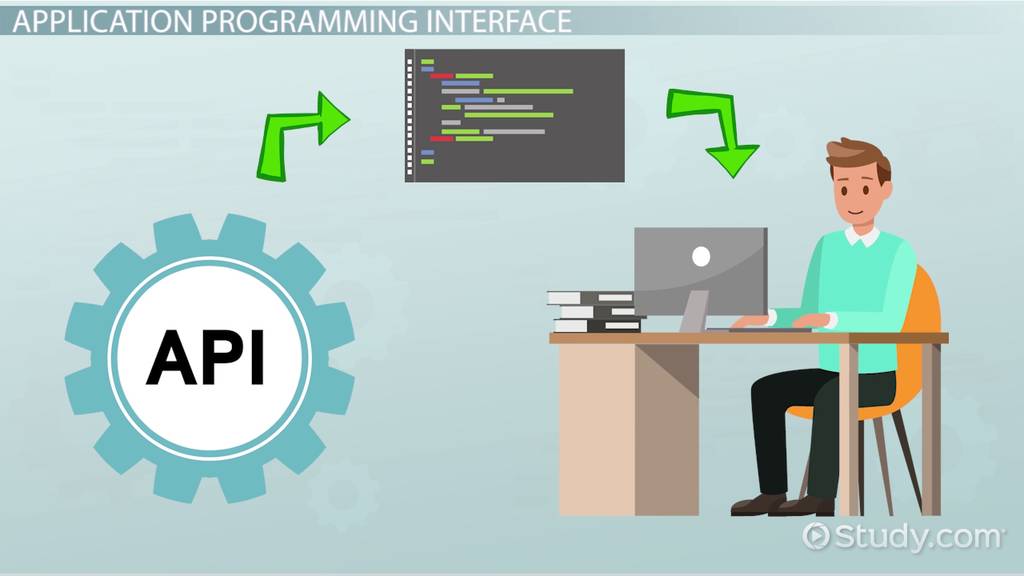 A 4-part primer on what an API is.
Part 1 is a more general view for non programmers to understand what APIs do in software.
A 4-part primer on what an API is.
Part 1 is a more general view for non programmers to understand what APIs do in software.--------
Why I Picked This: Our usual audience here is people who are tech curious, maybe small business people who need to understand their technology but not code. There’s no more important and misunderstood term than "API" so I made a good explainer.
Excerpt: An API is an interface that software code can use to execute a command or retrieve a set of data.
Ultra-Wide Screens (Part 2: Web Design) - Click here to read
 A deep dive into how the numbers of ultra-wide screens and monitors are growing and how it affects your .CSS and .HTML, should your web design manage what happens over 3000 pixels
--------
Why I Picked This: Sometimes I do want to give web design advice. This one about designing for very wide monitors ended up our most viewed article of all-time and pretty damn useful. And probably of interest to more people than you'd think.
Excerpt: Yes, managing ultra-wide screens isn’t a major DEFCON-1 level emergency for any of us. At least just yet. But if different widths keep growing in popularity, why not make your site look better for that 2, 5 or maybe even 10%? Especially when it is so easy.
Seinfeld, Plots, Premises and Technology - Click here to read
 How much of the show would have had some of the premises punctured by more recent technology? One way to find out: A deep dive.
 --------
Why I Picked This: I love a good tech excuse to write about pop culture. Seinfeld is the Rosetta Stone of modern culture; or more like the I Ching - there’s a Seinfeld episode to deal with every one of life’s situations.
Excerpt: I can only think of two episodes that would be totally ruled out by having a cellphone: The Movie and The Parking Garage. But most of these are just one aspect of one of three (or four) plots in a given episode. Very few of these are episode-ruining problems.
Using GPS - Part 1 (AutoCAD) - Click here to read
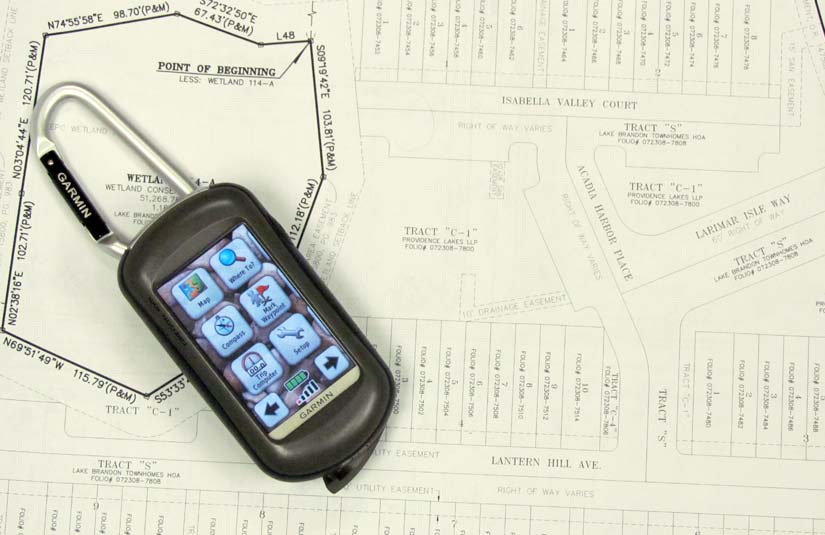 A little bit about GPS coordinates and Autocad, translating coordinate systems.
Honestly, probably a little more than the average person wants to know.
A little bit about GPS coordinates and Autocad, translating coordinate systems.
Honestly, probably a little more than the average person wants to know.--------
Why I Picked This: Another practical one, this in my/our specialization of custom AutoCAD programming.
Excerpt: Larger systems like street maps are dealing with real-world coordinates (a survey coordinate system). Translating the coordinate systems between the X/Y of a GPS coordinate and the X/Y of the internal AutoCAD coordinates is the key.
Disruptors - A Stupid Term In Stupid Situations - Click here to read
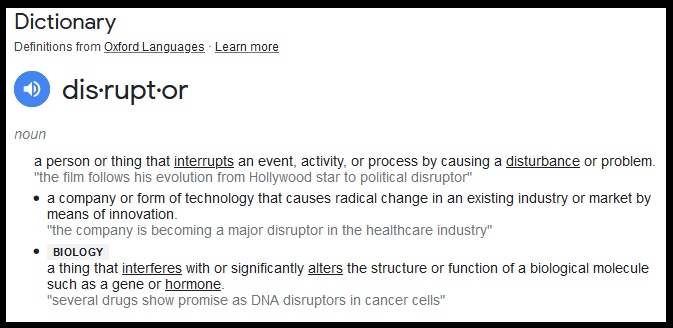 If you were to start a pizza restaurant across the street from a longtime neighborhood pizzeria and yours eventually became so successful and the old establishment goes out of business - are you a "disruptor" or do you just make better pizza?
--------
Why I Picked This: The most obnoxious word in business in 2023 is still the most obnoxious word in business today.
Excerpt: If you call yourself a disrupter, 4 out of the 5 people in the room are rolling their eyes at you in their head just as if you had said "paradigm shift" or "30,000-feet view". Don’t be that guy.
A Tale Of Two Trade Shows - Click here to read
 The sterile atmosphere within convention centers, coupled with the often-prohibitive costs of attendance, can make these events feel more like obligatory rituals than dynamic hubs of inspiration and collaboration. That said, there IS a point to going to industry events.
 --------
Why I Picked This: When it comes to running a business, I think everybody in every industry can agree that trade shows are awful.
Excerpt: The other thing I remember about conventions are some hangovers. I’ll elaborate more about this in the last section of this article but whether reconnecting with existing work contacts or trying to land new customers there is one lubricant: alcohol.
Keep A.I. Off The Electric Grid - Am I Being Paranoid Or Just Safe? - Click here to read
 For now, tight regulations, redundant oversight, engineering, and double- and triple-checking are a part of every utility company. I sleep better at night knowing that.
But until we are more sure of things, let’s keep AI out of as many electrical processes as possible. This isn’t sci-fi paranoia. It’s a real threat to humanity in the long run.
For now, tight regulations, redundant oversight, engineering, and double- and triple-checking are a part of every utility company. I sleep better at night knowing that.
But until we are more sure of things, let’s keep AI out of as many electrical processes as possible. This isn’t sci-fi paranoia. It’s a real threat to humanity in the long run.--------
Why I Picked This: Most of my AI writing is my tales of yelling at AI agents in all caps frustration. But this is a piece where AI intersects with something I’ve got experience with: electric utilities.
Excerpt: Even by ChatGPT’s own admission, when it comes to the chances of Artificial Super-Intelligence ignoring human input or overrides, "There is no consensus on the risk probability - estimates among experts range widely, often from <1% to >50%."
Pitch Theater: When Venture Capital Becomes a Spectator Sport - Click here to read
 A look at venture capital pitch rooms, the math behind portfolio investing, and how startup funding can drift from disciplined capital allocation into performance and spectacle - culminating in the cultural impact of Shark Tank.
--------
Why I Picked This: Normally I write about how tech can make our lives a little worse while making them better. In this one, I write about how VC meetings can make a business’ life a little better and a little worse.
Excerpt: Venture capitalists are not business geniuses with card-counting predictive accuracy. It’s just math. Venture capital runs on a simple calculus: most investments fail, a few return modest gains, and one outlier pays for the rest.
