
AI Is Eating the Physical World
A Physical Problem
Posted by Charlie Recksieck
on 2026-09-03
But those are mostly conceptual concerns about the results of artificial intelligence - much of which we think of as residing in "the cloud." What are the costs of physically operating AI?
What It Takes
AI is actually an enormous physical-industrial project. Claude, OpenAI, Google, Meta, all of them are powered by enormous data centers. Each of those requires lots of electricity, water, computer chips, transmission infrastructure, construction work, and large amounts of land.
Typically, when we're using ChatGPT, we're thinking of what it can do for us. The main time when people actually worry about the necessary physical infrastructure is when an AI data center is proposed in their town.
Power & Water
The Electricity Problem
AI data centers are consuming staggering amounts of power. This isn't just some future global warming problem or an environmental talking point. It's an infrastructure problem happening in real-time right now.
Local communities end up dealing with the consequences while the benefits accrue somewhere else. And if everybody wants AI everywhere, somebody has to physically build the stuff to power it. People are starting to wake up to this.
Water isn’t theoretical either
Data centers need cooling. Water consumption becomes particularly uncomfortable when facilities are being built in already water-stressed areas; water rights among communities and states were already on a fast track for being a serious future problem.
There’s something absurd about asking ordinary people to conserve water while enormous industrial facilities may require millions of gallons for something that, to the consumer, looks like a website.
The Inside Your Computer Part
And then there are the chips. It isn’t just electricity and servers. It requires specialized semiconductors at enormous scale.
The world was already discovering how fragile semiconductor supply chains are. The pandemic chip shortage showed consumers what happens when supply gets disrupted.
AI potentially creates another giant competing demand for the same fundamental manufacturing ecosystem. When tech companies say "we need more chips," those chips don’t magically appear.
And now we have even more geopolitics involve microchips. Chips depend on extraordinarily complicated international supply chains and semiconductor manufacturing is currently concentrated in a handful of countries.
Then add geopolitical disruptions - including the kind of shipping/energy uncertainty we’ve seen around the Strait of Hormuz - suddenly "AI infrastructure" starts looking much more like traditional geopolitics and industrial policy.
So, the consumer gets squeezed. AI companies are buying enormous amounts of scarce hardware, and manufacturers have huge incentives to prioritize the highest-margin customers.
Meanwhile consumers already experience bizarre shortages, price increases and artificial scarcity in technology. It doesn't take a cynic to envision that manufactures are intentionally not scaling up to meet demand to create a market for higher prices.
So, what happens when the world’s biggest technology companies are competing with ordinary consumers for the same underlying resources?
Conclusion - Who’s Gonna Manage This?
The free market can usually allocate resources when the prices reflect costs. But what if the costs are distributed among everyone else - electricity rates, water, infrastructure, environmental effects, supply-chain vulnerability?
We keep hearing that the market will sort this out. If an AI company can make billions while somebody else pays for the new transmission lines, higher utility costs, water depletion, or environmental damage, that’s not the market solving the problem - it’s the market finding suckers (aka, us) to pay for it. History gives us plenty of examples of industries happily privatizing profits while socializing costs.
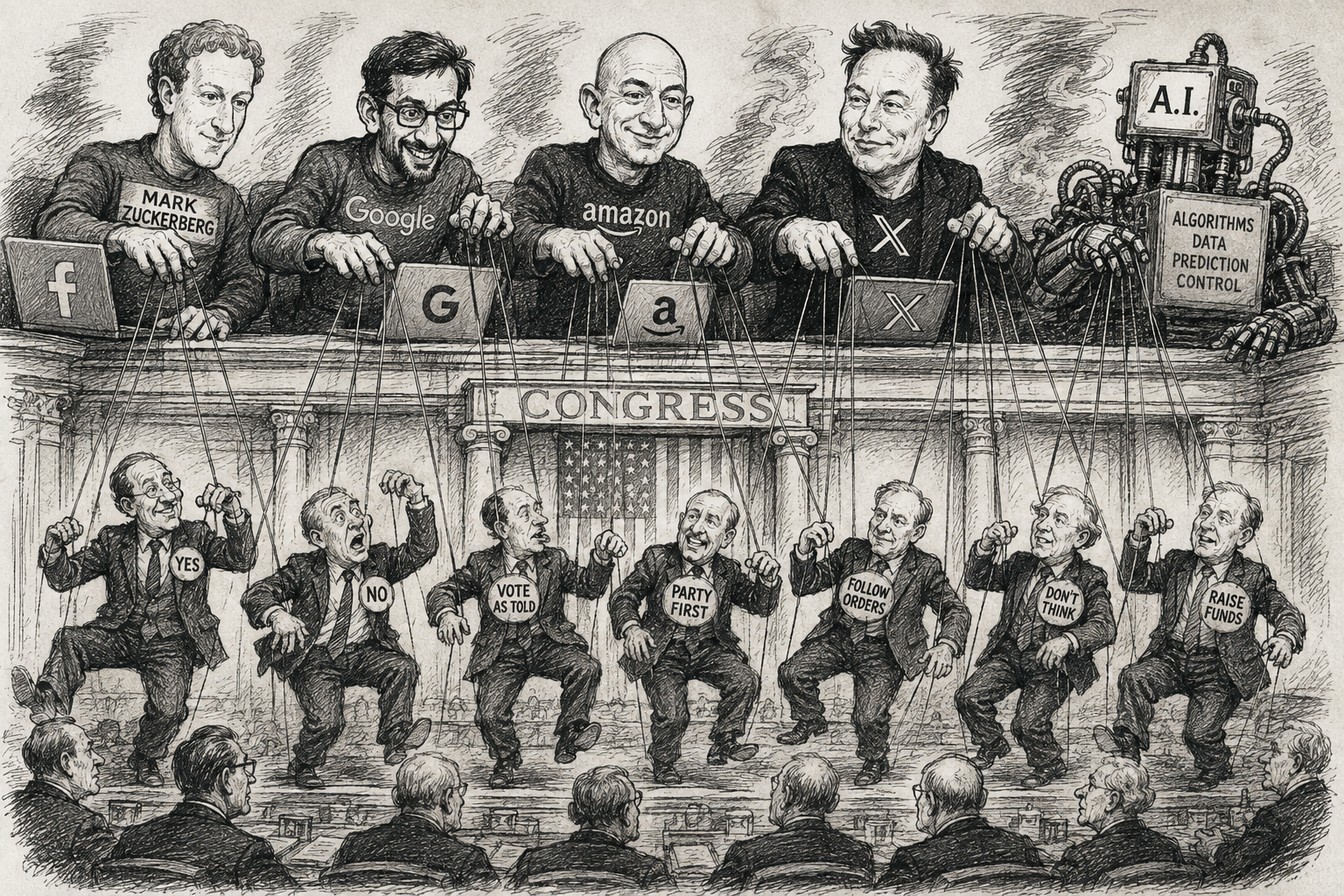
Maybe this is exactly the kind of thing government is supposed to regulate. But how the hell do we expect Congress to design workable rules for an infrastructure/technology system changing this quickly?
This isn’t just regulating an app. First of all, governing bodies have an awful track record of even trying to do that. We keep asking Congress to try to regulate technology that many members barely understand.
We're talking about electricity markets, water rights, semiconductor supply chains, transmission infrastructure, land use, international trade and rapidly changing computing technology.
Even well-intentioned regulation can accidentally make things worse if lawmakers don’t understand the technology or the economics.
We’re essentially conducting a gigantic uncontrolled experiment in real time. Good luck to all of us.
